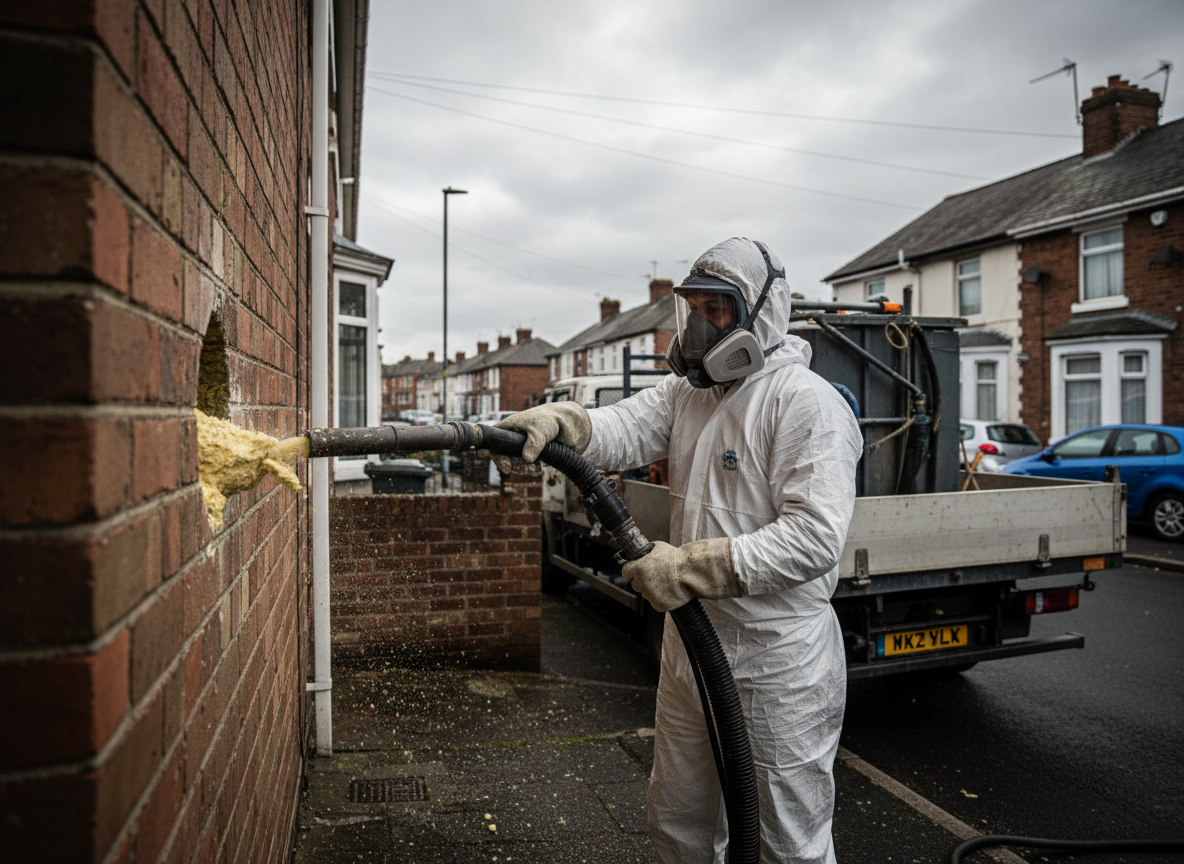
Hull's post-war housing stock, particularly terraces and semis built between the 1950s and 1970s in areas such as Holderness Road and Anlaby, frequently contains injected urea-formaldehyde or polyurethane foam that has since degraded. Removal requires cutting access points through the outer leaf without compromising the structural tie between the two brick skins, then using mechanical extraction tools to pull the foam free while monitoring for residual dust that can migrate into living spaces. The coastal climate brings persistent driving rain from the Humber, so crews must work in sections to prevent water ingress during the job and immediately seal any exposed cavities with breathable membrane before refilling.
Edge cases in the Hull area include homes where foam was pumped into already damp cavities near the River Hull or in low-lying streets around Boothferry Road. In these properties the foam has often bonded to corroded wall ties, requiring slower hand removal and tie inspection before any new insulation is considered. Local building control expects notification for cavity work on pre-1980s dwellings because removing the foam changes the thermal performance and can affect mortgage surveys; NexaClean Crew schedules around these requirements rather than rushing the extraction.
Homeowners sometimes attempt DIY removal with basic tools, which leaves foam fragments lodged against the inner leaf and creates cold spots that later show as mould on internal plaster. Professional crews use negative-pressure extraction units connected to HEPA filtration to contain the fine particles that otherwise settle throughout the property. After extraction, the cavity is left open for inspection so any remaining moisture from Hull's frequent rainfall can dry before new insulation or repairs are installed.
Technician insight
In Hull, the thing that catches most people out with Cavity wall spray foam removal is how the frequent easterly rain and high water table around the Humber estuary keep older terraces damp, so the foam often stays saturated and sticks harder to the inner leaf than it does inland.
Foam Removal on a 1960s Terrace near Holderness Road
Heavy rain had driven moisture through failed foam in a 1960s terrace, causing persistent internal damp. Inspection showed the foam had bonded to corroded ties and trapped water against the brick. NexaClean Crew extracted the material section by section under negative pressure, ventilated the cavity for several days, then sealed it. The homeowner reported the damp patches drying within weeks.
How it works
- 1
Initial Cavity Survey
Technicians attend the Hull property to inspect external walls, locate injection holes, and assess foam type and moisture levels using borescopes.
- 2
Access and Containment Setup
Small access points are created in the outer leaf while dust extraction and sheeting protect internal rooms and gardens.
- 3
Foam Extraction
Mechanical and vacuum methods remove the foam in stages, with frequent checks for wall-tie condition and residual material.
- 4
Cavity Drying and Sealing
Exposed cavities are ventilated to dry, then closed with appropriate membrane and mortar to match existing brickwork.
Pricing
Cost depends on property age, cavity depth, and how much foam has bonded to the brickwork; quotes are provided after the on-site survey.