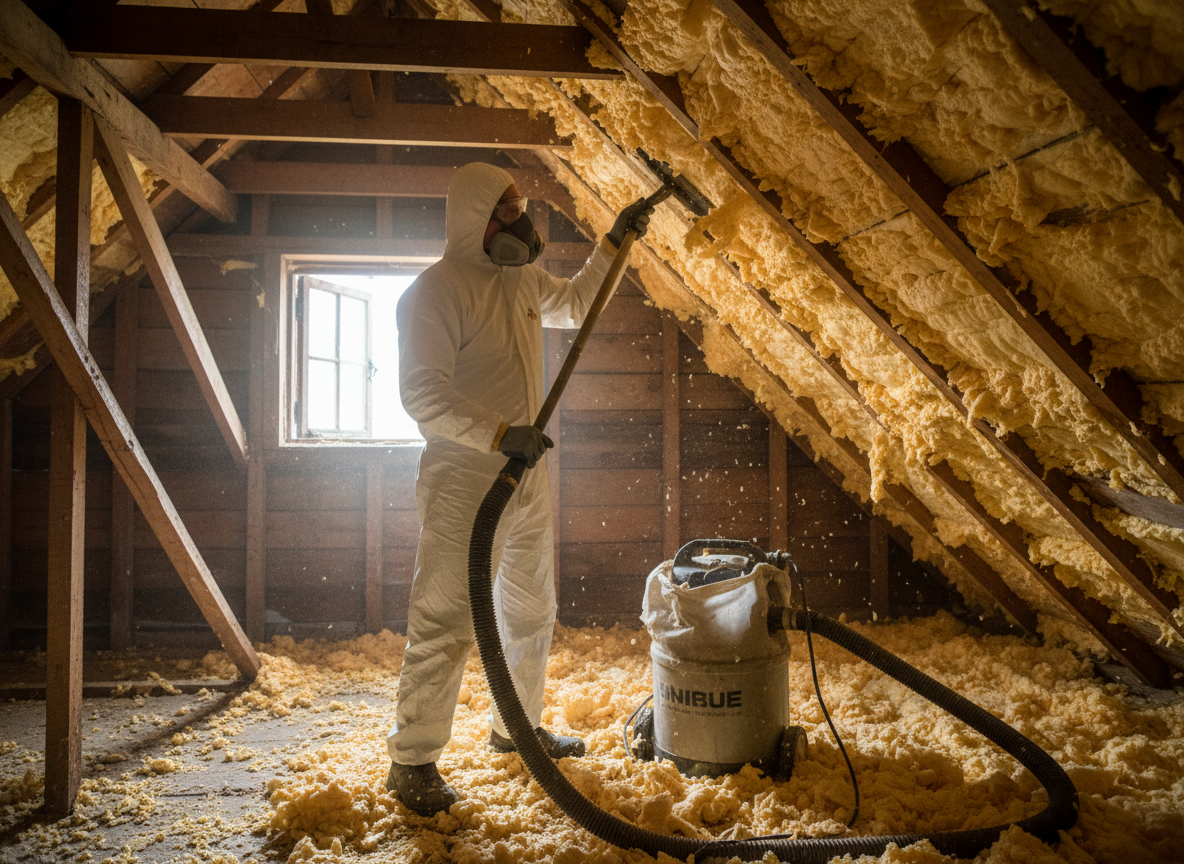
Hull's Victorian and Edwardian terraces along streets like Holderness Road and in the Newland area often received spray foam in lofts or on solid walls during the 2000s. The region's flat terrain and high water table let rainwater sit against brickwork, so foam that seemed to seal heat instead traps condensation. Over time this leads to timber decay and musty odours that only appear once the foam is cut away. Removal requires careful scoring and vacuum extraction to avoid damaging original lath and plaster ceilings common in these houses.
Winter rainfall in the Hull area frequently exceeds 600 mm between October and March, pushing moisture through any gaps left during earlier insulation work. Crews working from the Boothferry Road base see repeated cases where foam was applied over existing felt that had already failed, creating hidden pockets of water along rafters. Extraction must include drying periods and new ventilation routes fitted to Building Regulations standards for pitched roofs in Yorkshire. Skipping these steps simply moves the damp problem to the next season.
Seasonal Timing Guidance
Jobs booked between April and September allow better loft access and faster drying because lower rainfall reduces re-wetting of exposed timbers. Winter calls still receive 24/7 attendance, yet homeowners should expect temporary dehumidifiers running for several days after foam removal in properties near the Humber.
Technician insight
In Hull, the thing that catches most people out with Spray Foam Removal near me is the solid brickwork on 1900s terraces around Anlaby Road that holds water for weeks after foam comes off, especially when the job runs during the wetter months when the Holderness plain drains slowly.
Loft in a Newland Terrace
Problem: persistent damp smell and stained ceilings reported in a 1920s two-up two-down. We found spray foam bonded directly to failed felt with pooled water along the eaves. Removed the foam, installed new soffit vents and left the space open for two weeks of drying. Outcome: ceiling timbers checked sound and no recurrence of odour after re-roofing.
How it works
- 1
Site Inspection
Assess foam depth, substrate condition and any signs of rot in lofts or wall cavities across Hull postcodes.
- 2
Containment Setup
Seal rooms and install dust extraction to protect original features in terraced homes.
- 3
Foam Extraction
Score and remove material in sections using handheld tools and HEPA vacuums without damaging underlying structure.
- 4
Ventilation Upgrade
Fit new air bricks or ridge vents to prevent future moisture build-up typical in the Hull climate.
- 5
Final Clean and Report
Remove debris, photograph the cleared area and supply a written summary for insurance or future works.
Pricing
Upfront quotes after inspection; cost driven by property age, foam thickness and access constraints in Hull terraces.