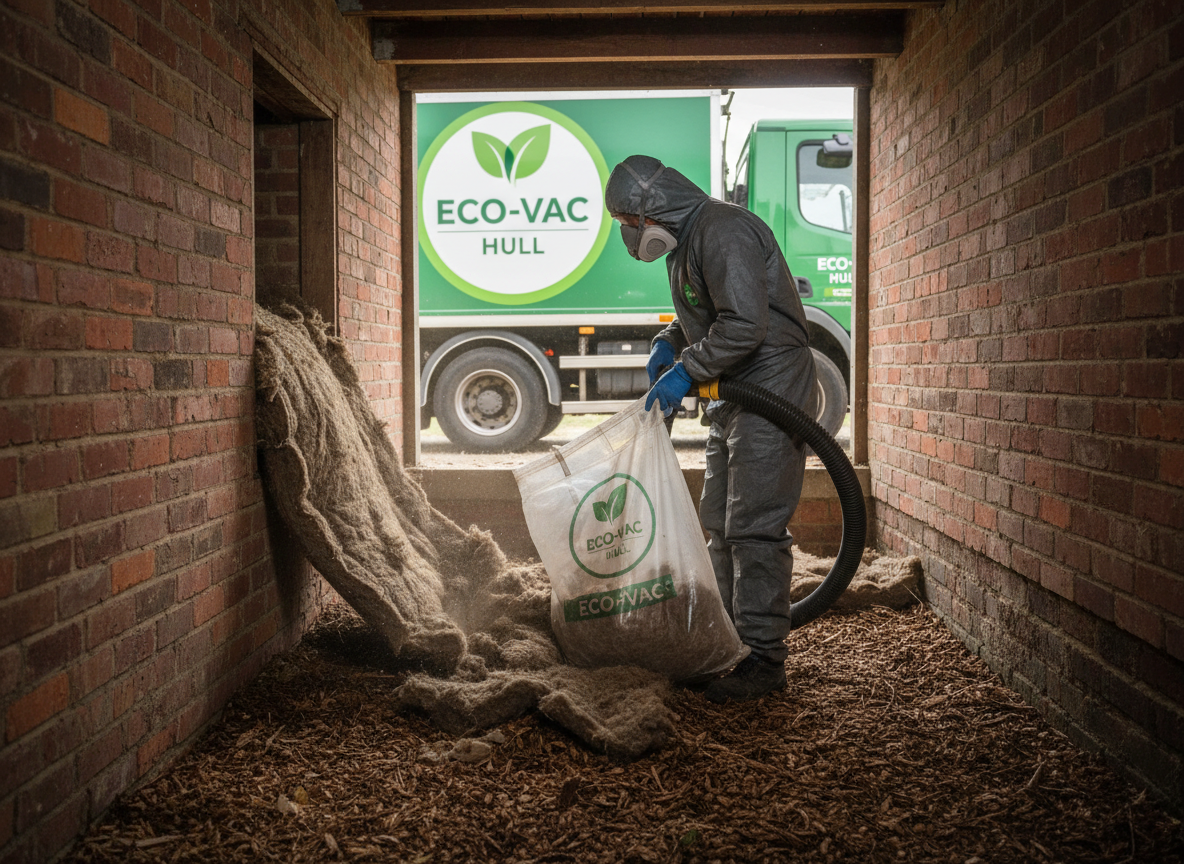
Hull's older terraced and semi-detached stock, particularly properties built before the 1970s around areas like Boothferry Road and Newland, often received cavity-fill spray foam in the 1990s and early 2000s. Over time this material breaks down, traps moisture from the Humber estuary's frequent damp air, and leads to timber decay or reduced thermal performance. Environmentally friendly insulation removal requires careful extraction that avoids releasing fibres into living spaces and ensures the waste is taken to licensed disposal sites rather than general landfill.
Access in these narrow Victorian terraces is rarely straightforward. Internal walls may have been altered, and external brickwork can be fragile after decades of exposure to Yorkshire's wet winters and freeze-thaw cycles. Technicians must map pipe runs and electrical cables before starting, then use low-dust equipment to pull the foam without damaging the original masonry. Any remaining residue is neutralised with approved solutions so the cavity can accept new, breathable insulation if required by current building standards.
Homeowners sometimes attempt DIY removal with basic tools, which leaves foam fragments that continue to absorb water and create hidden mould. Professional crews working from 317 Boothferry Road know the typical wall depths and fixing patterns found in HU postcode properties, allowing them to complete the job with minimal disruption to daily life while keeping the site clean for follow-on trades.
Technician insight
In Hull, the thing that catches most people out with environmentally friendly insulation removal is how quickly the older brick terraces along the estuary side pull moisture back into the cavity once the foam is gone. Homeowners often expect the walls to dry on their own, but without addressing the original damp proofing the new insulation fails within a couple of winters.
Cavity Foam Removal in a Boothferry Terrace
A 1930s mid-terrace near 317 Boothferry Road showed persistent damp patches on the gable wall after years of cavity-fill foam. Inspection found the foam had absorbed water from driving rain and blocked ventilation. The crew extracted the material under containment, cleaned the brick faces, and left the cavity ready for a breathable alternative that suits the property's age and location.
How it works
- 1
Site Assessment
Inspect cavity walls, note access points, and identify any moisture or timber issues common in Hull's older housing.
- 2
Containment Setup
Protect floors, electrics, and ventilation paths to prevent foam particles spreading through the property.
- 3
Controlled Extraction
Remove spray foam using equipment suited to the material type and wall construction without damaging brickwork.
- 4
Cavity Cleaning and Disposal
Clear residue, treat surfaces, and transport all waste to approved facilities for environmentally responsible handling.
- 5
Final Check
Verify the cavity is clear, document condition, and advise on next steps such as new insulation or repairs.
Pricing
Cost depends on property size, foam depth, access difficulty, and whether additional drying or repairs are needed after removal.