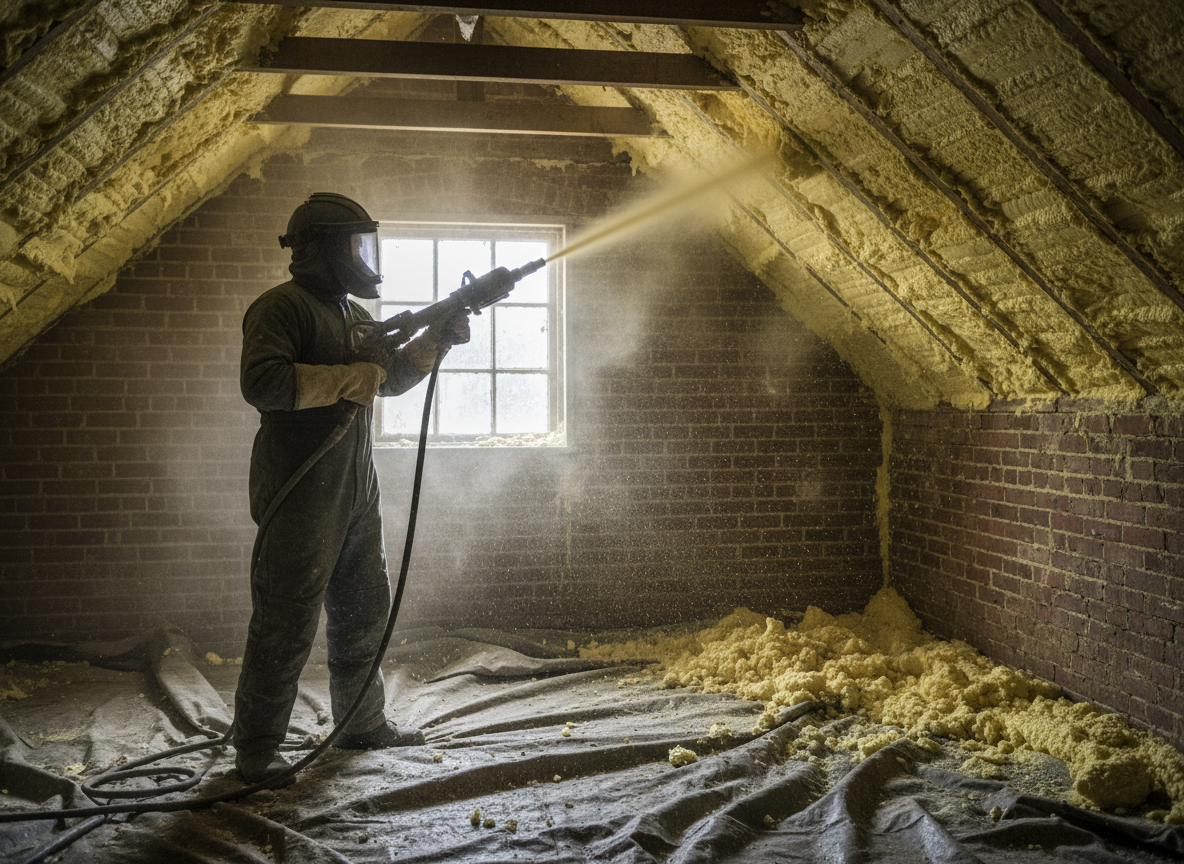
Hull terraces built before 1950 often contain spray foam applied directly to rafters and between joists in lofts that were never designed for it. Sand blasting removes the material without tearing out original lath and plaster ceilings below, but the process must account for the fine brick dust that mixes with foam particles in these narrow roof voids. Crews working from 317 Boothferry Road know that many HU5 and HU6 properties have limited loft access hatches, requiring smaller blast nozzles and frequent vacuum extraction to prevent residue settling into downstairs rooms.
The Humber estuary climate brings frequent driving rain and high humidity, which softens older foam and makes it cling to timber more stubbornly than in drier inland counties. Sand blasting at low pressure prevents gouging into rafters already weakened by past leaks common along the Holderness Road corridor. Operators check for hidden electrical cables and gas pipes that run through insulation in post-war semis before starting, because the abrasive can damage sheathing that has become brittle from years of condensation.
After blasting, surfaces are vacuumed and wiped to remove silica dust that would otherwise mix with the damp air typical of Hull winters and cause ongoing issues. Homeowners in the Avenues and Newland areas frequently report musty smells returning if residue is left behind, so the final step always includes a moisture check on exposed timbers to confirm the roof can dry properly once the foam is gone.
Technician insight
In Hull, the thing that catches most people out with sand blasting spray foam insulation removal is how the constant damp from the Humber softens the foam unevenly, so what looks like a straightforward blast job in a Boothferry Road terrace often turns into extra time clearing sticky residue from the lower edges of rafters that stay wet longer than in drier parts of Yorkshire.
Foam Removal in a HU4 Terrace Loft
Homeowner noticed persistent damp smells after spray foam was added years earlier. Inspection found foam trapping moisture against rafters in a narrow loft with limited hatch access. Sand blasting cleared the material in sections while extraction kept dust out of living spaces below. Timber dried out once the foam was gone and no further mould appeared.
How it works
- 1
Site Assessment
Inspect loft access, timber condition and any wiring or pipework in Hull properties before setting up blast equipment.
- 2
Containment Setup
Seal rooms below and install extraction to capture dust in older terraces where gaps between floors allow particles to travel.
- 3
Controlled Sand Blasting
Remove foam in stages using low-pressure abrasive suited to the moisture-softened material found in estuary-adjacent homes.
- 4
Final Clean and Check
Vacuum all surfaces, wipe rafters and test moisture levels to ensure the roof space can dry without new mould growth.
Pricing
Cost depends on loft size, foam thickness and access difficulty in older Hull homes; site visit required for accurate scope.