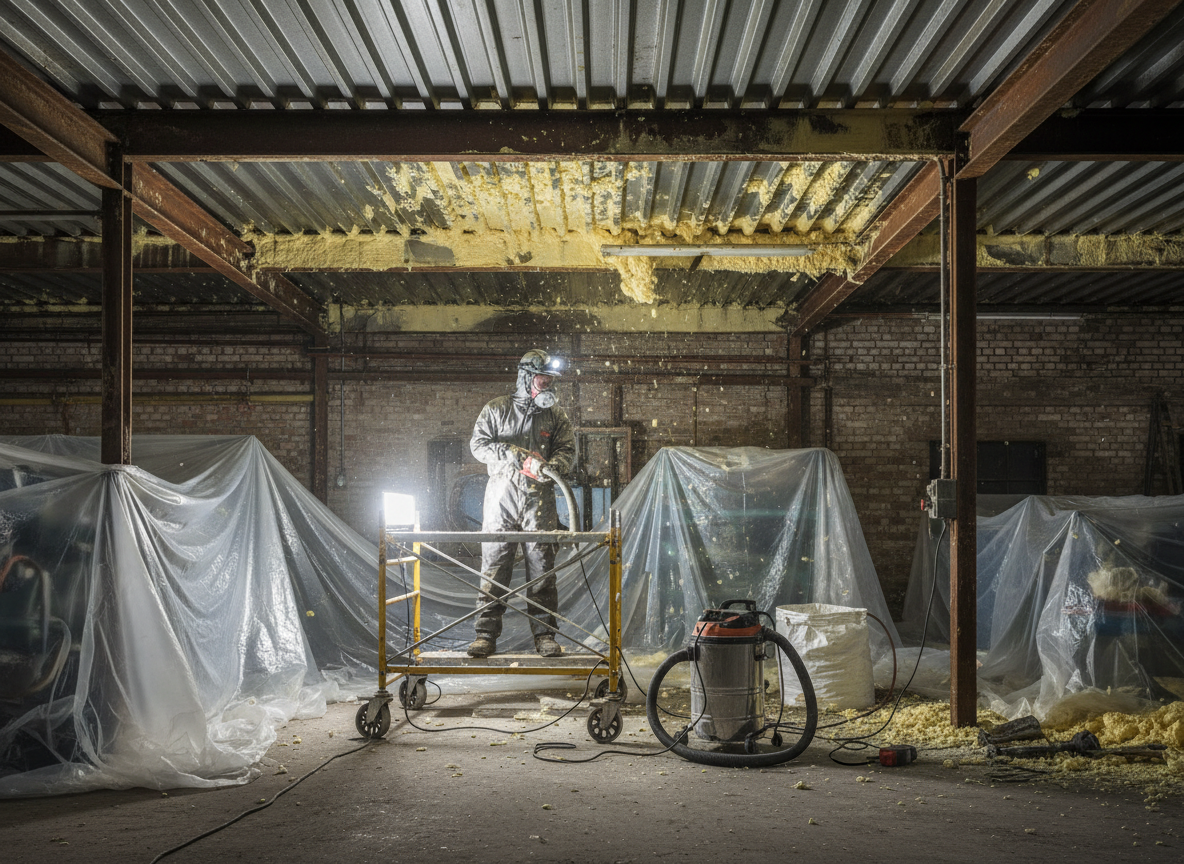
Hull warehouses often date from the port expansion era, featuring corrugated metal roofs and concrete frames that trap moisture from the estuary. Spray foam applied decades ago bonds tightly to these surfaces, and removal requires careful separation to avoid structural damage during the frequent high-wind and rain events common along the Humber. NexaClean Crew works from 317 Boothferry Road and operates 24/7 to minimise disruption to active storage or distribution sites.
The process starts with assessing foam thickness and substrate condition, then uses controlled mechanical and chemical methods to lift material without releasing fibres into the large open volumes. In older Hull industrial units, hidden voids behind cladding can hold water, so crews check for corrosion before cutting sections. Disposal follows local waste rules for the Hull area, where landfill options are limited and transport to approved sites adds planning time.
Edge cases include foam that has absorbed salts from the nearby docks, making it brittle and prone to crumbling during extraction. Teams protect existing racking and floor slabs, which are often uneven from years of forklift traffic. Ventilation is critical in enclosed warehouse sections to manage dust and any off-gassing during removal.
Seasonal Considerations
Hull's wet autumns and cold winters slow foam removal because lower temperatures stiffen the material and increase condensation inside the building. Crews schedule longer drying periods between stages when working near the river.
Technician insight
In Hull, the thing that catches most people out with Warehouse spray Foam removal is the constant damp air off the Humber estuary softening the foam unevenly and causing it to tear in layers instead of releasing cleanly from the metal cladding.
Dockside Warehouse Near the Humber
Foam on the roof of an older storage unit had absorbed moisture and begun to sag. Inspection showed corrosion along the purlins where water had pooled behind the insulation. NexaClean Crew removed the material section by section, treated the steel and cleared the site without halting daytime operations.
How it works
- 1
Site Assessment
Inspect foam depth, substrate type and any moisture damage in the warehouse.
- 2
Containment Setup
Install barriers and ventilation to control dust across the large interior space.
- 3
Material Removal
Use mechanical and chemical techniques to separate foam from metal and concrete.
- 4
Surface Cleaning
Remove residue and check for corrosion before final clearance.
- 5
Waste Disposal
Transport material to approved Hull-area facilities and provide documentation.
Pricing
Cost depends on warehouse size, foam thickness and access difficulty; larger or multi-level sites require more equipment and time.