2026-10-22 ·
How to Remove Spray Foam from Lofts in Hull Terraced Houses
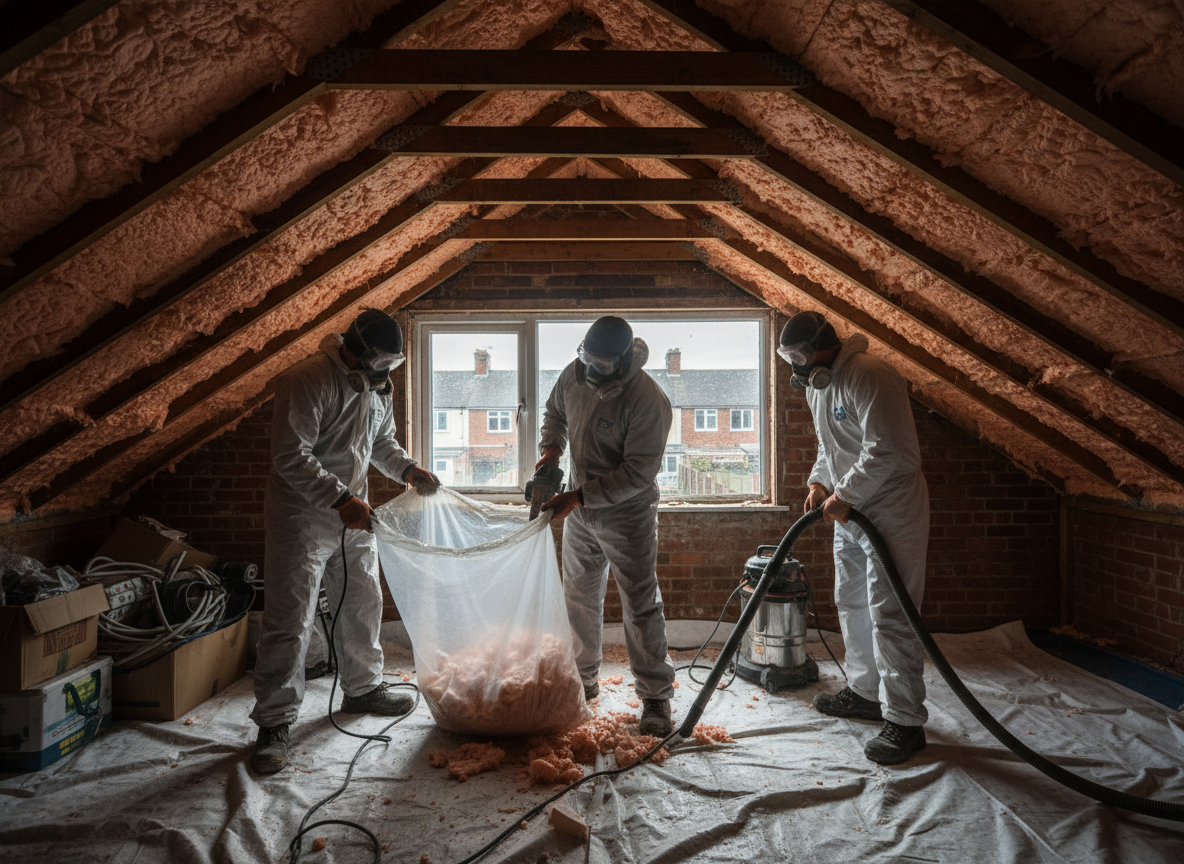
Removing spray foam from lofts in Hull terraced houses starts with a full inspection to identify foam type and any hidden damage to joists or felt. Crews typically complete the work in 2 to 4 days depending on loft size and access through the narrow terraced roof spaces found throughout Hull.
Understanding Hull Terraced House Lofts
Hull terraced houses built between the late 1800s and 1930s feature narrow lofts with limited headroom and shared party walls that make spray foam removal more involved than in detached properties. The timber joists in these homes are often closely spaced at 400 mm centres and can be weakened where closed cell foam has been applied directly to the underside of the roof tiles. Moisture trapped against the tiles during Hull's frequent wet winters can lead to rot that only becomes visible once the foam is stripped away. Local rooflines along streets in areas such as Newland and Anlaby Park frequently show signs of previous insulation attempts that now require targeted removal to restore ventilation.
Step-by-Step Removal Process
Begin by isolating the loft and protecting the rooms below with dust sheets and temporary boarding. Cut the foam into manageable sections using long-reach tools while avoiding damage to electrical cables and water pipes that run along the joists in most Hull terraces. Once the bulk is removed, residual material is cleared with handheld scrapers and a vacuum system to prevent particles settling into the rooms below. Ventilation checks follow to ensure the roof space meets current building standards before any new insulation is considered. loft spray foam removal teams working in the city follow this sequence on every job to minimise disruption to neighbouring properties.
Challenges Specific to Hull's Housing Stock
The compact layout of Hull terraces means access is usually through a single loft hatch positioned above the landing, limiting equipment size and requiring careful material handling. Older felt under the tiles can tear easily once foam is peeled back, especially on properties near the docks where salt air accelerates wear. Shared chimney stacks between houses add extra care points because foam often bridges across the stack and must be cut cleanly to avoid affecting the neighbour's loft. Soil conditions around Hull also contribute to higher ground moisture that can rise into the roof space through gaps in the brickwork, making full removal essential before any re-insulation work.
When to Call Professionals
Homeowners should arrange a professional assessment before starting any removal if the foam covers more than half the loft or if electrical wiring runs through the material. insulation assessment visits from local crews can identify whether the foam was applied over existing insulation or directly to the roof structure. For properties where mortgage lenders have flagged the foam, mortgage lender spray foam removal specialists understand the documentation required. Dealing with Spray Foam in Victorian Homes Near Hull Docks provides further detail on the extra steps needed for pre-1900 builds common in the city centre. Crews based at 317 Boothferry Road, Hull, HU4 6EZ operate 24/7 and can schedule visits around shift patterns typical for local workers.